
The Murder Case and the Contest over Sanity
Under the Banner of HeavenThis flow follows the investigation, prosecution, and appeals that test whether Ron Lafferty’s religious beliefs make him legally incompetent or leave him accountable for murder.
increasing Bearing strength in each event
 decreasing
Bearing strength in each eventdecreasingThe Search Begins

A Family Killing Becomes a Manhunt
Discovery and suspicion
When Allen Lafferty returns home on July 24, he finds Brenda Lafferty and Erica Lafferty dead. The violence shocks Utah County, and police initially question Allen before evidence and family knowledge direct attention to Ron Lafferty.
The investigation uncovers a religious dimension. Reports of a handwritten revelation and the brothers’ fundamentalist associations suggest that the killings may have been understood by the perpetrators as a sacred command, not simply as a private feud.
Arrest in Nevada
After the murders, Ron and Dan flee with Ricky Knapp and Chip Carnes. Knapp and Carnes eventually escape with the car and cooperate with authorities, providing leads that help police locate the brothers.
On August 7, officers arrest Ron and Dan at a casino buffet in the Reno area. Their capture ends the immediate flight, but not their claim that they committed no crime because they were doing God’s will—a claim that will become central to the trials and the book’s questions about religious responsibility.
Dan’s Trial and Sentence
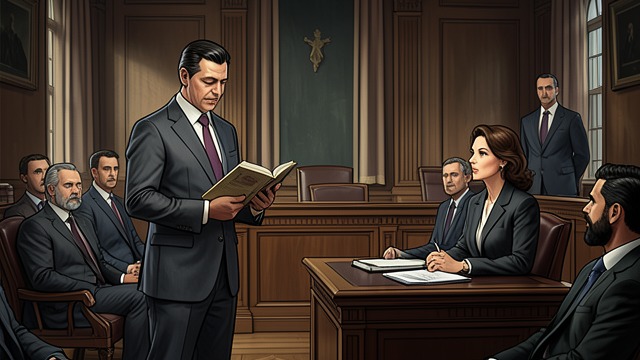
A Defendant Who Accepts Judgment
Self-representation
Dan Lafferty insists on defending himself, leaving appointed attorneys in advisory roles. At trial he maintains that he is not guilty of a crime because he acted according to God’s will, even as he does not deny killing Brenda Lafferty and Erica Lafferty.
His position makes the trial a collision between ordinary criminal law and a personal theology that claims exemption from it. The jury finds him guilty of two counts of first-degree murder.
Life imprisonment
During the penalty phase, Dan tells jurors that they may impose death if conscience requires it. Ten jurors vote for death, but the required unanimity is absent, and the sentence is two life terms.
Dan later says he was disappointed not to be executed. His response illustrates how completely he has placed the legal judgment inside his religious narrative: imprisonment is not proof of moral error, but another event he can interpret through faith.
Ron’s First Conviction
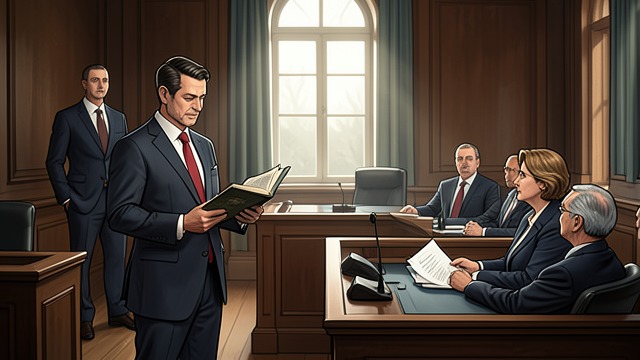
Competence and Refusal
The rejected defense
After psychiatric assessments find Ron Lafferty competent to stand trial, his attorneys hope to argue that mental illness should reduce the murder charges. Ron rejects that strategy because he believes it would amount to an admission of guilt and denies that he is insane.
His refusal leaves the defense with limited options. The prosecution presents the case against him, while Ron’s own insistence that he answered to God rather than human law complicates the court’s effort to evaluate his understanding of the charges.
Death sentence
The jury convicts Ron of first-degree murder and sentences him to death. He chooses a firing squad rather than lethal injection.
The verdict does not resolve the deeper issue. The court has imposed criminal responsibility, but the public and later appellate judges continue to confront whether a person can understand legal proceedings while interpreting them through a delusional religious system.
The Retrial and Experts

The Meaning of Religious Belief
Conviction overturned
In 1991, the Tenth Circuit overturns Ron Lafferty’s conviction because the competency standard used at his original trial was inadequate. The court accepts that he understood the charges but questions whether his delusional system allowed him to interpret them realistically.
The ruling raises concern that the case could affect how courts handle religiously motivated crimes. It also exposes the difficulty of drawing a boundary between socially shared faith and an individual’s idiosyncratic claims of divine instruction.
Competing testimony
At the 1996 retrial, defense experts describe Ron as delusional and unable to appreciate the case against him. Prosecution experts argue that strange religious beliefs are not, by themselves, proof of psychosis or incompetence.
The jury hears a further complication: Ron’s beliefs arose within a religious community that discussed revelation collectively, yet his own ideas became extreme and self-serving. After deliberating, the jury again convicts him of murder, treating him as legally responsible despite the dispute over his mental state.
Appeals and the Death Row Future

Judgment Deferred
A sentence renewed
After the retrial, Ron Lafferty again receives a death sentence and continues appealing. In 2001, the U.S. Supreme Court declines to hear his appeal, leaving the conviction in place and the possibility of execution increasingly real.
By 2002, he is summoned to court after the state files a warrant related to execution. Ron says he intends to pursue available appeals, and new counsel continues the effort to challenge his sentence.
The family’s continuing ordeal
For Brenda Lafferty’s family, the long proceedings repeatedly revive the loss. Her relatives describe grief, regret, and frustration as each trial and appeal reopens the case without bringing Brenda or Erica back.
The legal process protects against an irreversible mistake, but its duration prolongs the family’s exposure to the crime. Ron remains on death row, while Dan interprets his brother’s likely execution as part of an approaching end-times design rather than as the state’s final answer to the murders.
July 24 to August 7, 1984
January 1985, in Provo
April 1985, at the first trial
1991 to April 1996
1996 to the book’s 2002 present
